
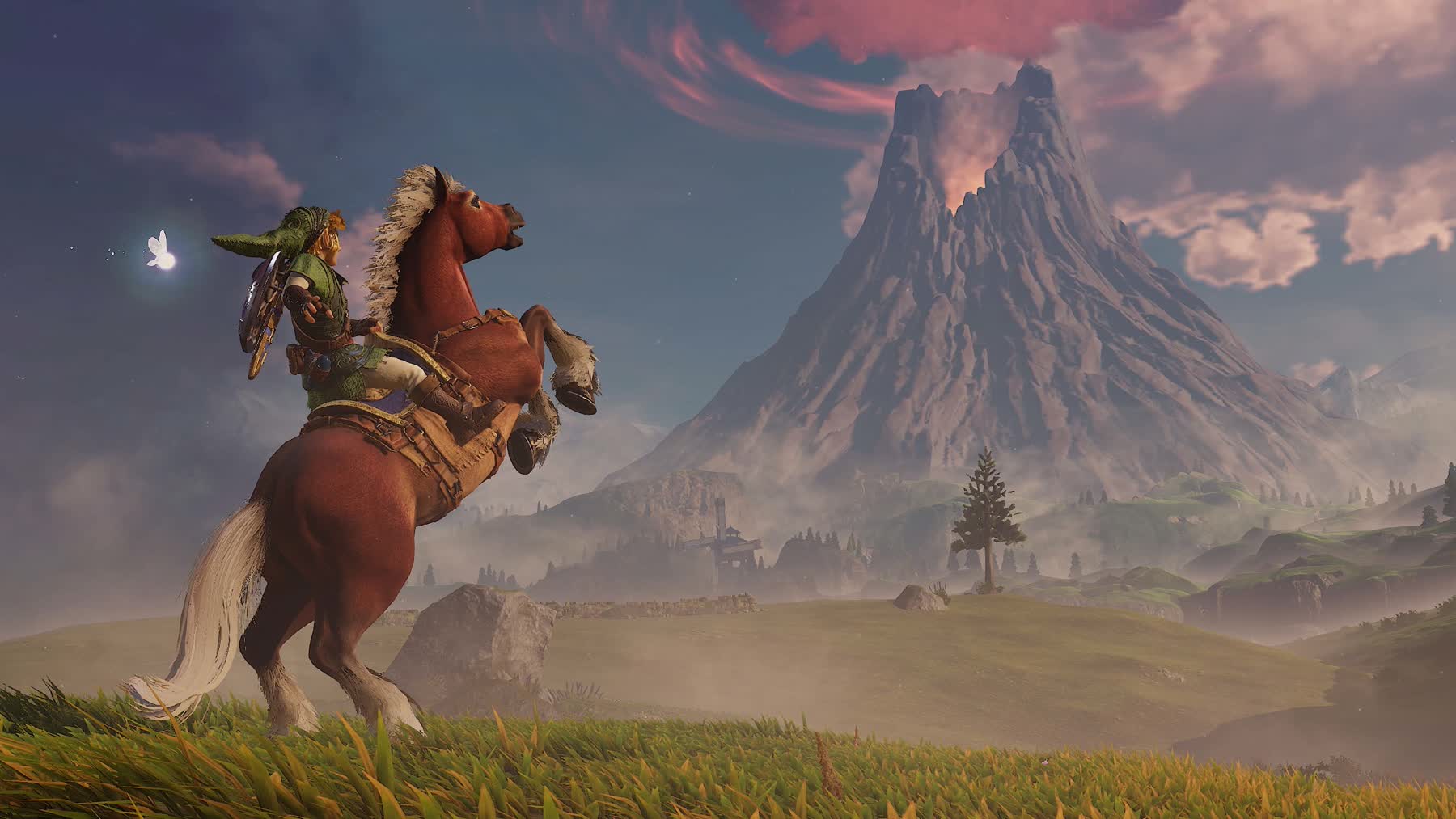
Returning to Ocarina of Time usually means remembering how to play it. The camera has its own habits, Link jumps when he reaches a ledge and a trip through the inventory can interrupt the simplest task. Nintendo's Switch 2 remake changes that relationship with a familiar Hyrule. Link can jump and dash at the press of a button, the camera moves freely and the characters he meets speak during expanded cutscenes.
The Ocarina of Time remake launches on 5 November 2026, exclusively for Nintendo Switch 2. Nintendo has rebuilt the 1998 adventure from the ground up, with orchestral music and remodeled locations alongside those new controls. The journey still follows Link across childhood and adulthood, but even a stay in town comes with a difference: time keeps moving.
Ocarina of Time remake release date and platforms
Nintendo's official listing dates the remake for 5 November 2026. It is a Switch 2 exclusive, with support for TV, tabletop and handheld play. There is no original Switch version.
Nintendo announced the game in June before Eiji Aonuma presented its gameplay during the Zelda 40th Anniversary Direct in September. The anniversary celebrates the series, which began in Japan in 1986. Ocarina of Time arrived on Nintendo 64 in 1998.
The official title is simply The Legend of Zelda: Ocarina of Time. Calling it the remake helps distinguish it from the N64 original and 2011's Ocarina of Time 3D. This is a separate purchase, not an upgrade to either version.
Watch the Ocarina of Time remake trailers
Nintendo released its overview trailer on 14 October, following the gameplay presentation shown during September’s Zelda 40th Anniversary Direct. Both official videos are below.
Ocarina of Time remake price and editions
The US price is $59.99 digitally or $69.99 for the physical edition. Nintendo's physical release has textured foil cover art in its first print run, available while supplies last.
Nintendo's Canadian listings put the digital version at CAD $84.99 and the physical version at CAD $99.99. In Japan, the tax-inclusive prices are ¥7,980 digitally and ¥8,980 physically.
The US digital listing estimates a 27 GB download. Allow some spare storage for updates, since that figure may change before release.
Gameplay changes: A new camera and more control over Link
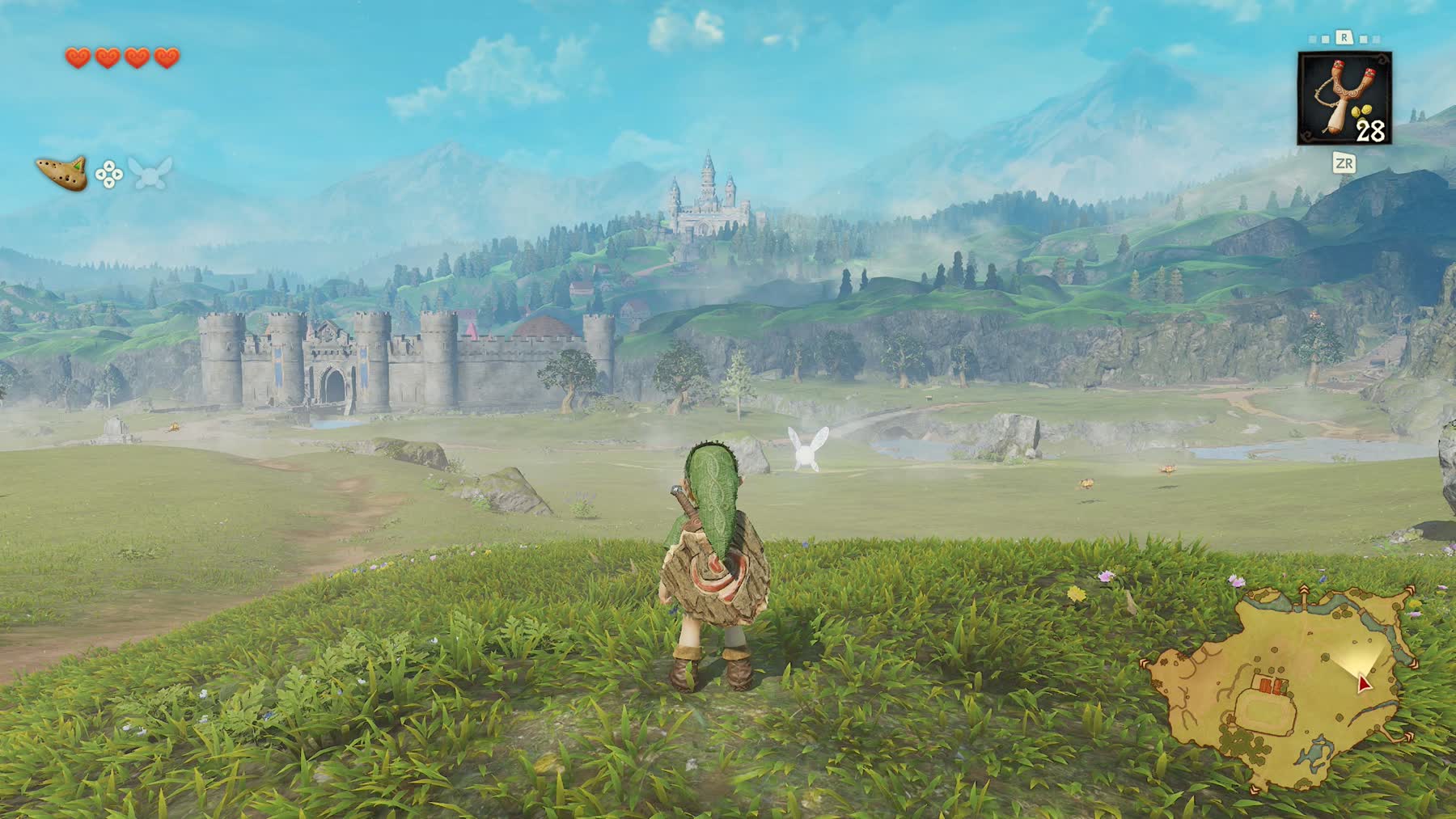
The most immediate changes are likely to be the ones under your thumbs. A dedicated jump button gives Link an action that the original largely handled automatically. A dash command changes how he gets around, while the Right Stick lets you move the camera freely.
Nintendo's gameplay details also describe quick weapon and item swapping, plus motion aiming for tools such as the slingshot and bow. Those adjustments should make the repeated business of exploring a room, aiming at a target and changing equipment less cumbersome.
Gyro aiming itself is not new to Ocarina of Time. The 3DS version already offered it alongside touchscreen inventory controls. The Switch 2 remake combines those familiar conveniences with a much larger change to movement and camera control.
It remains a single-player adventure across Link's two eras, with items suited to different stages of his life. The familiar dungeon-and-puzzle structure is still central to the game. A free camera and a jump button do not turn it into Breath of the Wild.
Hyrule keeps moving, even in town
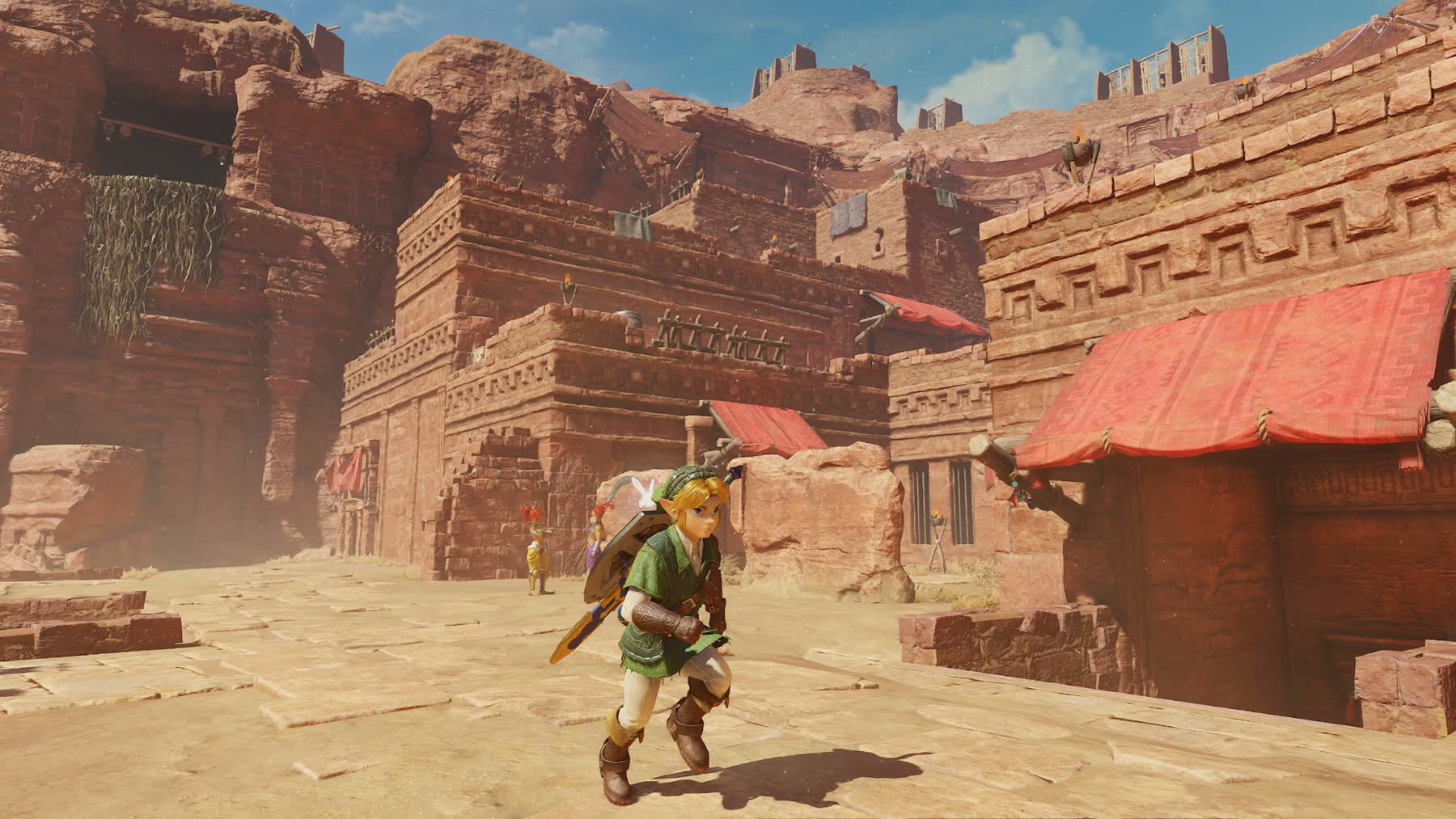
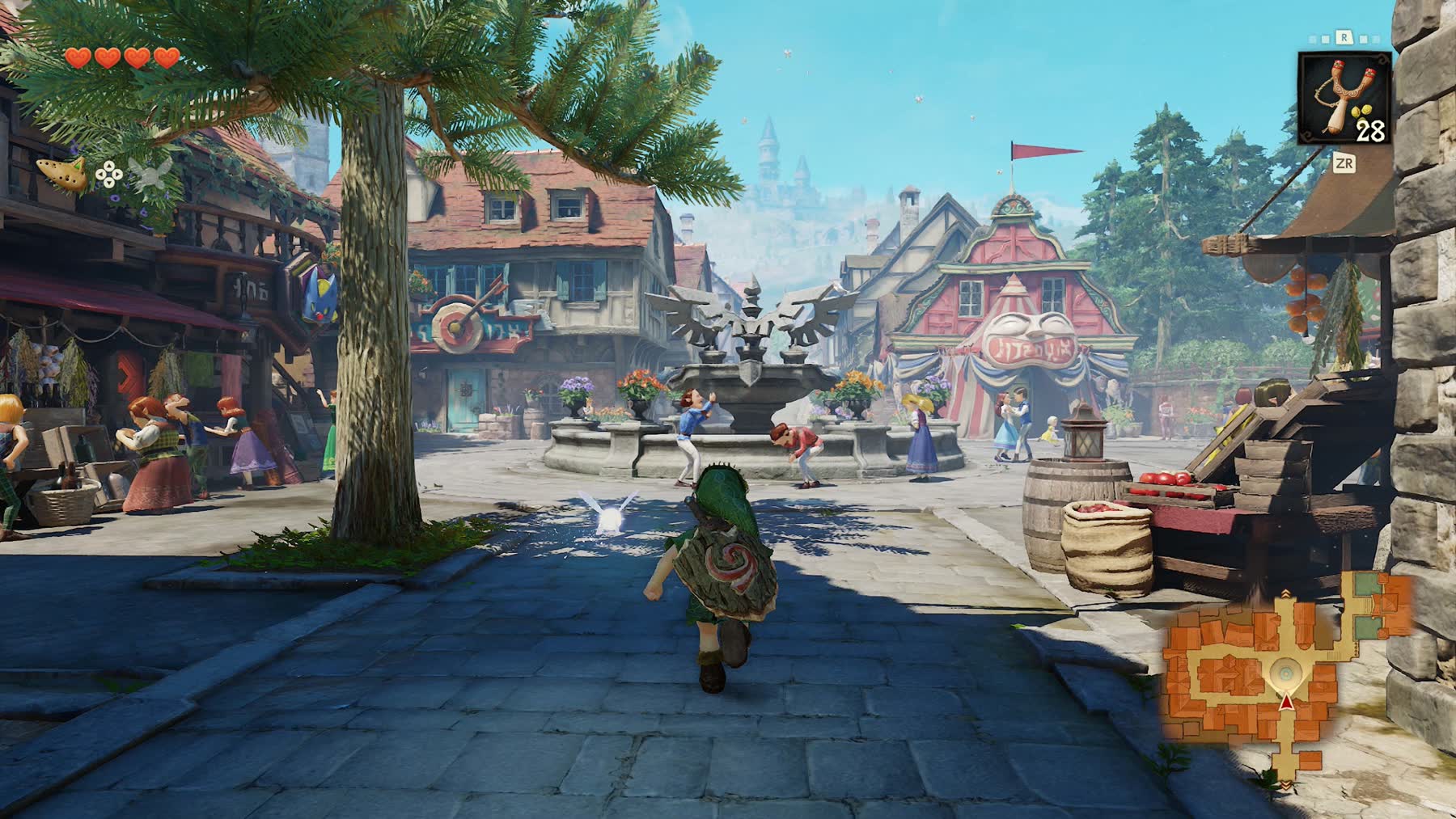
Nintendo has remodeled the locations and overhauled materials and textures throughout Hyrule. Castle Town and Gerudo Fortress are among the places featured in its recent promotion, alongside Goron City and Zora's Domain.
One change goes beyond their appearance. The day/night cycle now continues in towns, where the original could hold the time of day in place. Spending time among shops and townspeople will no longer mean stepping outside the world's clock.
There is also a new way to find your bearings after a break. Threads of Time records your story progress and next objective, with a large tapestry gradually filling in as you play. If you return after a week away and cannot remember where Link was heading, there will be somewhere to check.
Nintendo has not announced a Temple of Light dungeon. Suggestions that inventory changes reveal a new dungeon remain speculation.
Voice acting and an orchestral soundtrack
Ocarina of Time's conversations will sound different this time. Nintendo has confirmed fully voiced cutscenes, with expanded dialogue giving the characters more to say.
That wording applies to cutscenes, not every line spoken by every person in Hyrule. Shacknews reports that Link still uses vocalisations rather than spoken dialogue. A full official voice cast has yet to be detailed.
The soundtrack is getting symphonic orchestral music, while Nintendo also describes refreshed sound effects. Music already has a practical role in Ocarina of Time, so these changes sit alongside another addition: the game can listen to you play.
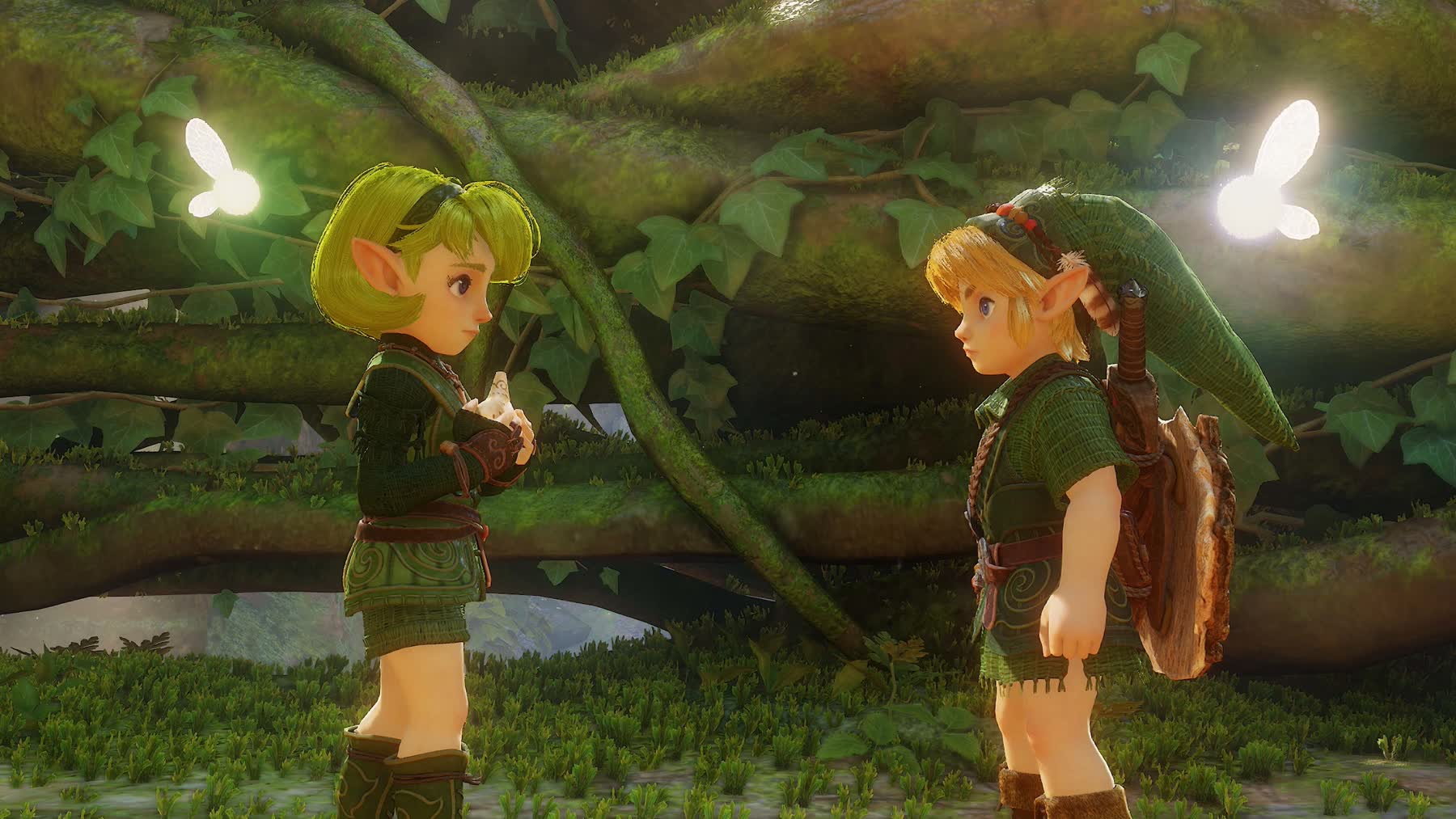
You can hum Link's ocarina songs
Once Link has learned a melody, you can hum it within range of the Switch 2's built-in microphone and have him perform it in the game. Nintendo says instruments can work too, including the ocarinas being released alongside the anniversary celebrations.
Button controls remain available. There is no need to buy an instrument or sing to get through the adventure.
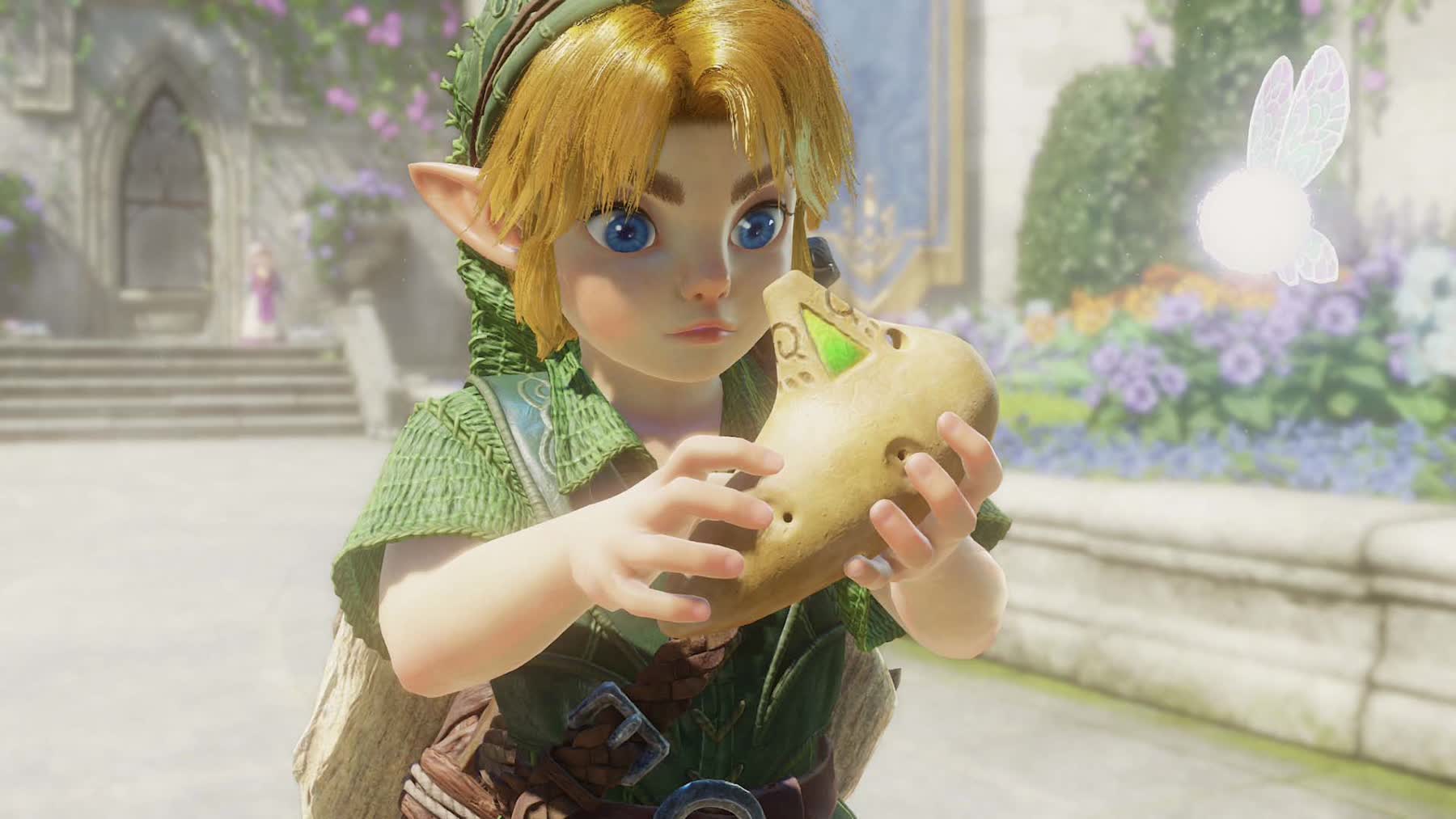
For anyone tempted by a physical prop, HORI's electric Ocarina of Time is listed at $49.99 in the US, with an expected release date of 5 November. It plays individual notes or 12 preset songs and comes with a display stand.
Despite its shape, the HORI version is not a wind instrument. You press a mouthpiece button and finger buttons instead of blowing into it. It is not a controller either: the console hears the sound it produces. Three AA batteries are required and sold separately.
What Zelda Notes adds on your phone
The remake will support Zelda Notes through the Nintendo Switch App. Its Ocarina-specific features give you a record of your travels and a few activities away from the main quest.
Nintendo's September announcement describes four additions:
- Today's Record keeps a chronological account of daily accomplishments, including statistics such as enemies defeated.
- Gossip Quest challenges you to identify an in-game location from a hint image, earning points towards ocarina music scores.
- Play Ocarina turns the phone's touchscreen into an instrument. It includes guided and automatic playing, with custom scores shared through QR codes.
- Ocarina of Time Quiz draws from more than 2,000 questions. You can take it once a day or spend rupees earned in the game on extra attempts.
Zelda Notes does not require a paid Nintendo Switch Online membership, though you will need a compatible smart device and the relevant app setup. These are companion features, separate from the in-game Threads of Time system.
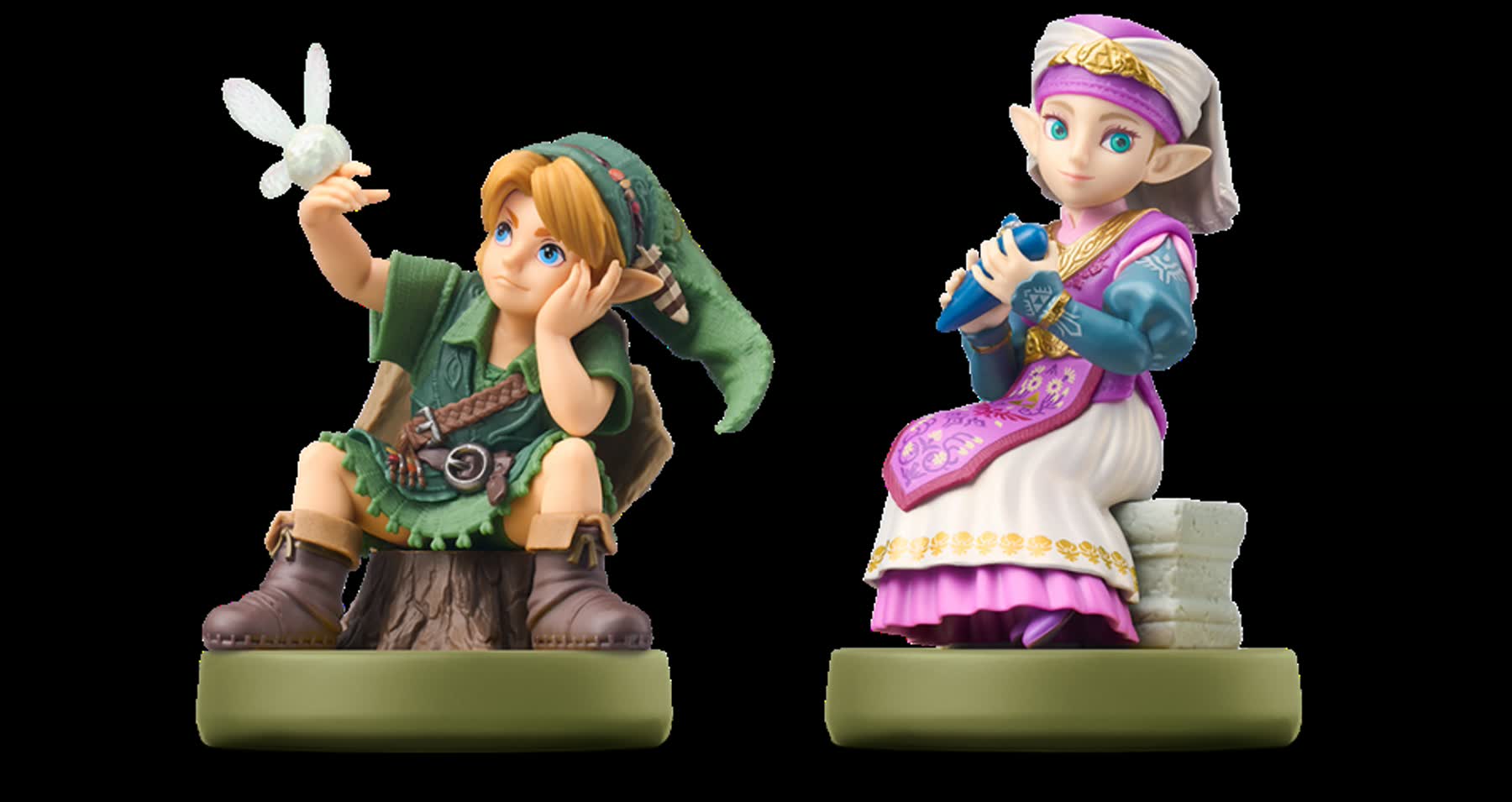
Amiibo and the Zelda anniversary Switch 2
New Young Link and Young Zelda amiibo are due in 2027, priced at $24.99 each in the US. They unlock in-game masks with a retro graphical style. They are not launching alongside the game in November.
Existing Zelda-series amiibo will also provide extras, although Nintendo has not published a complete figure-by-figure reward list in the material announced so far.
The Zelda 40th Anniversary Switch 2 arrives earlier, on 29 October, at $519.99 in the US. The game is not included. Themed Pro Controller and carrying case accessories are also scheduled for that date.
Boss rematches, Master Quest and performance
Ocarina of Time 3D included Master Quest and Boss Challenge, giving returning players rearranged dungeons and boss rematches. The 14 October overview introduces another way to revisit battles in the Switch 2 remake.
VICE reports that the new Hall of Fallen Foes lets players display statues of defeated enemies and approach selected statues to trigger boss rematches. Master Quest has not been announced.
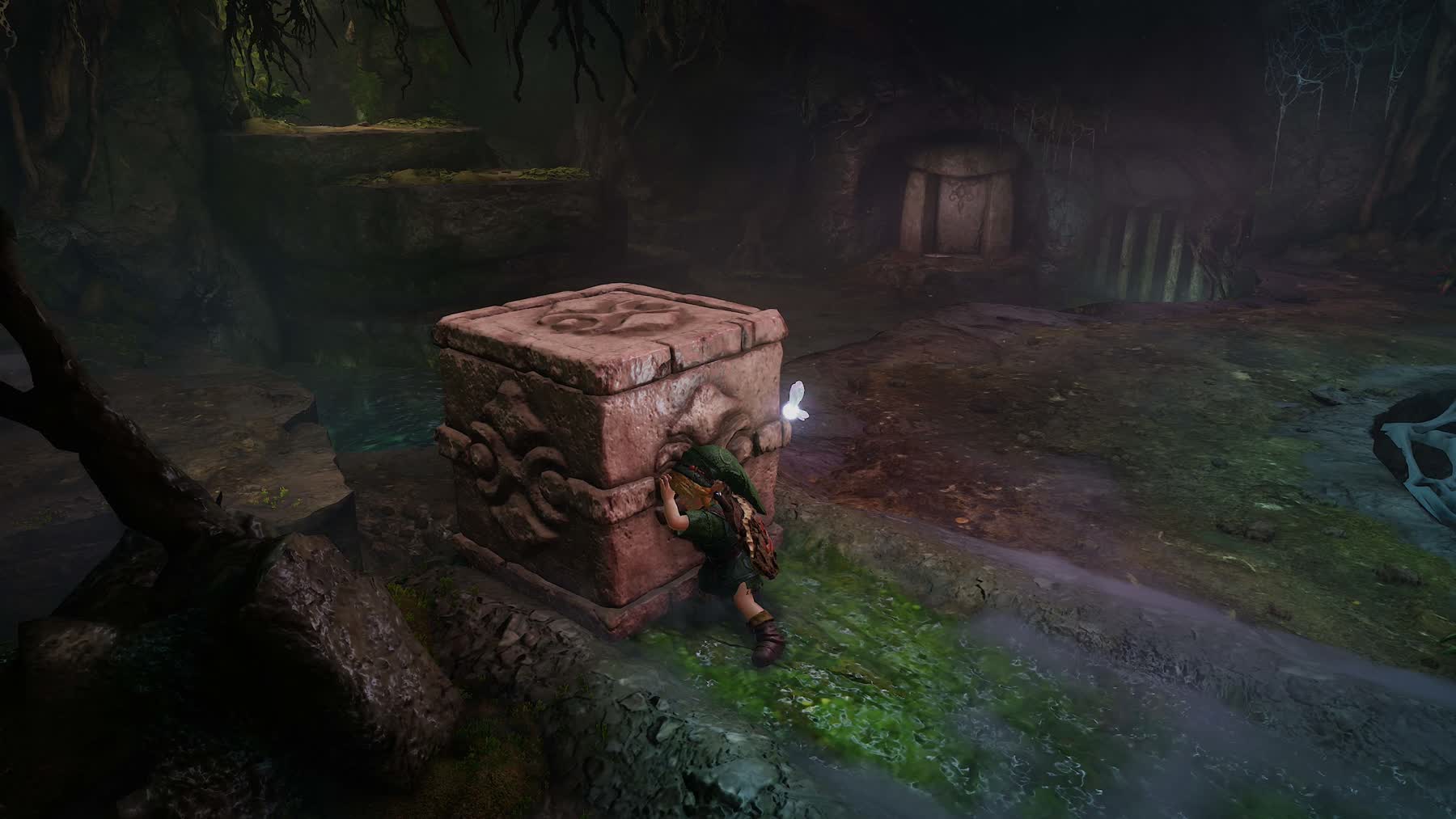
Nintendo promises smoother performance and faster loading, but its announcements do not specify a frame-rate or resolution target. Reports about 1080p and 60 fps should not be treated as a guarantee for the finished game. The store lists HDR and surround sound support.
The N64 original remains a separate option through Nintendo 64 – Nintendo Classics with a Nintendo Switch Online + Expansion Pack membership. That gives you the older game on Switch or Switch 2. The remake arriving on 5 November is a separately sold release, with its own controls and presentation.